Helping Your Middle or High School Student Re-Regulate at Home: A Guide for Parents and Caregivers
When children and teens become emotionally overwhelmed, their brain shifts into “survival mode” (fight, flight, freeze, or shutdown).
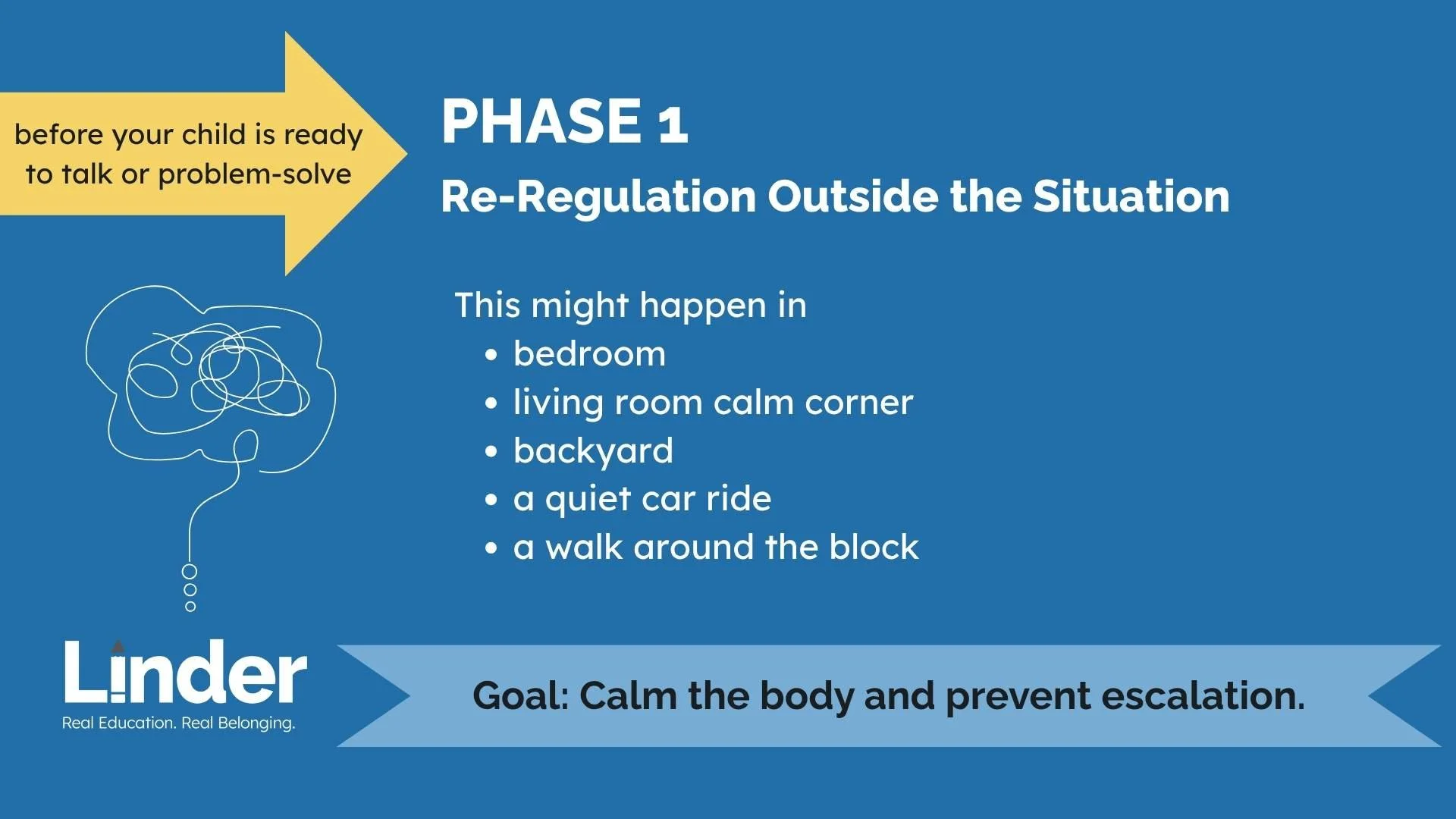
Goal: Help your child calm their body, reset their brain, and return to expectations with dignity.
In that moment, reasoning, lecturing, or imposing a consequence usually makes things worse.
Goal: Help your child calm their body, reset their brain, and return to expectations with dignity.
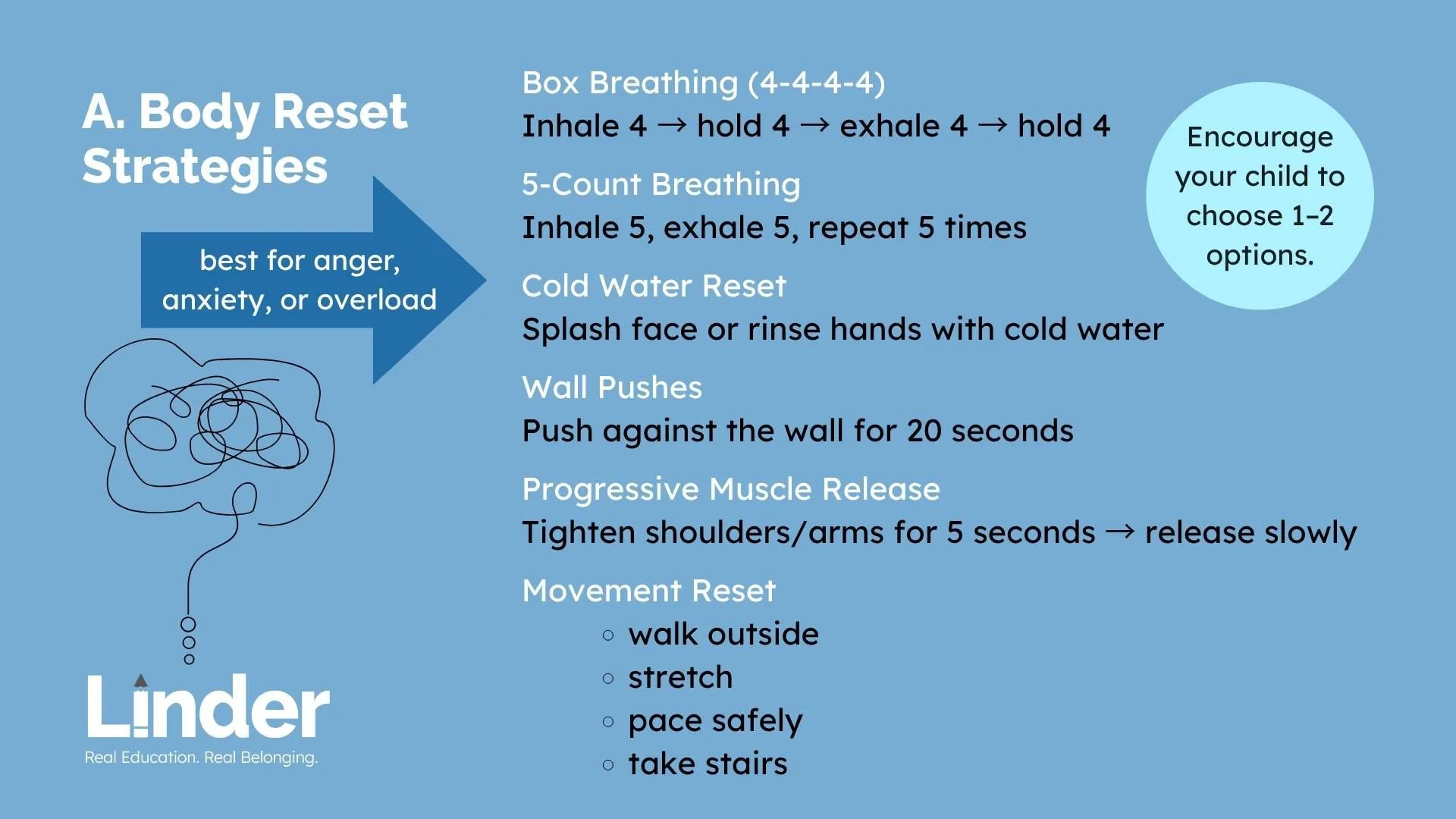
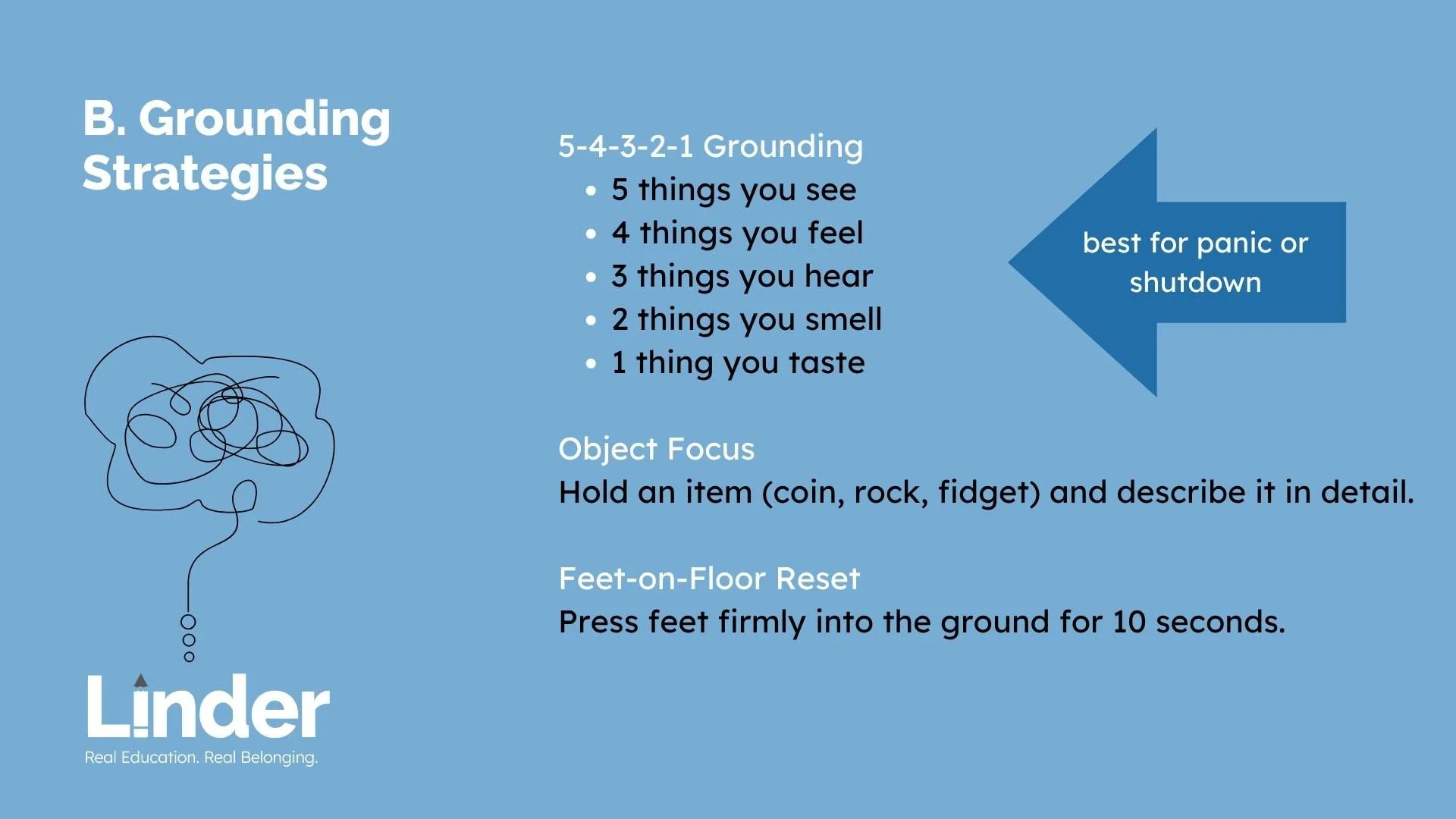
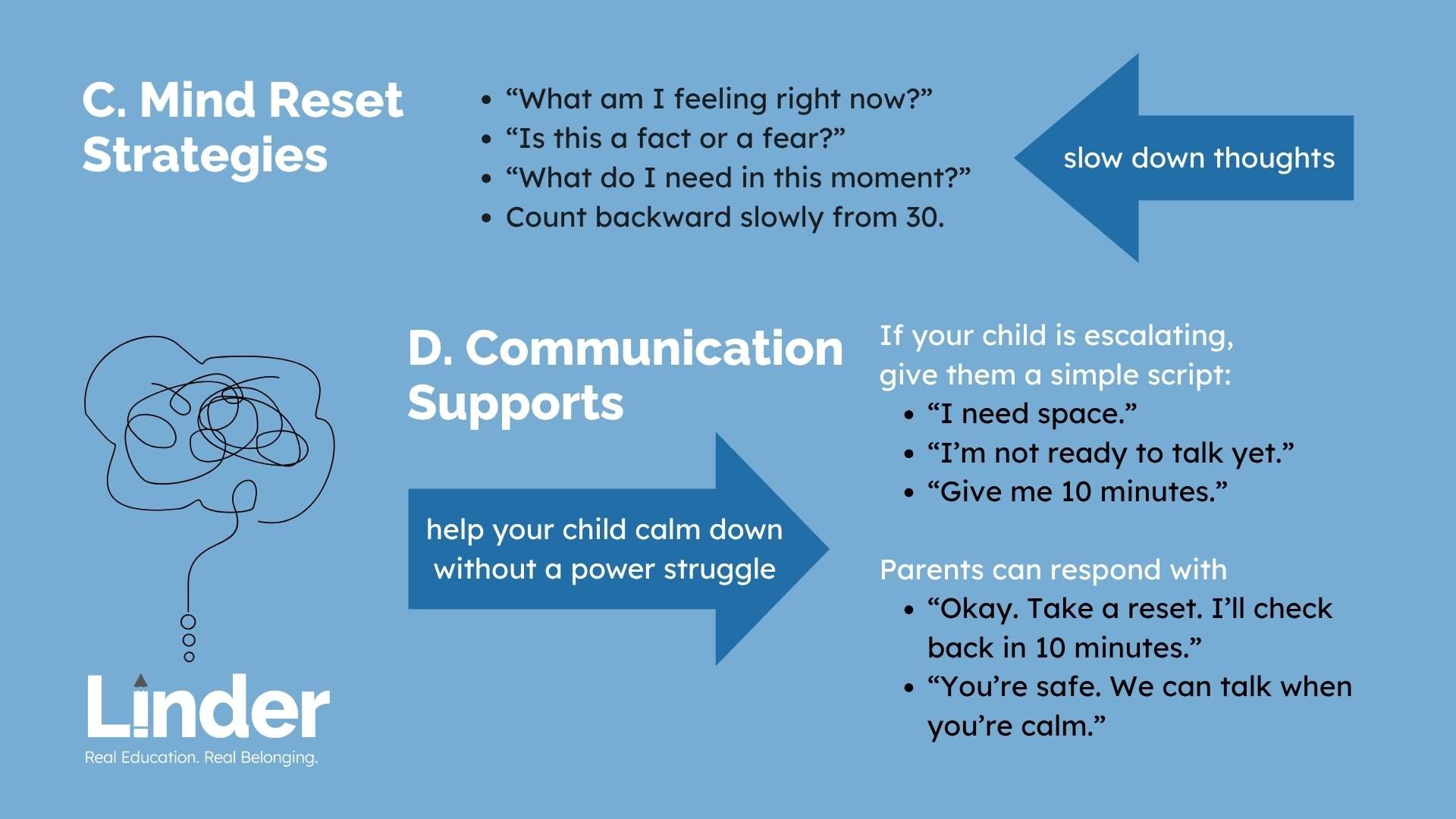
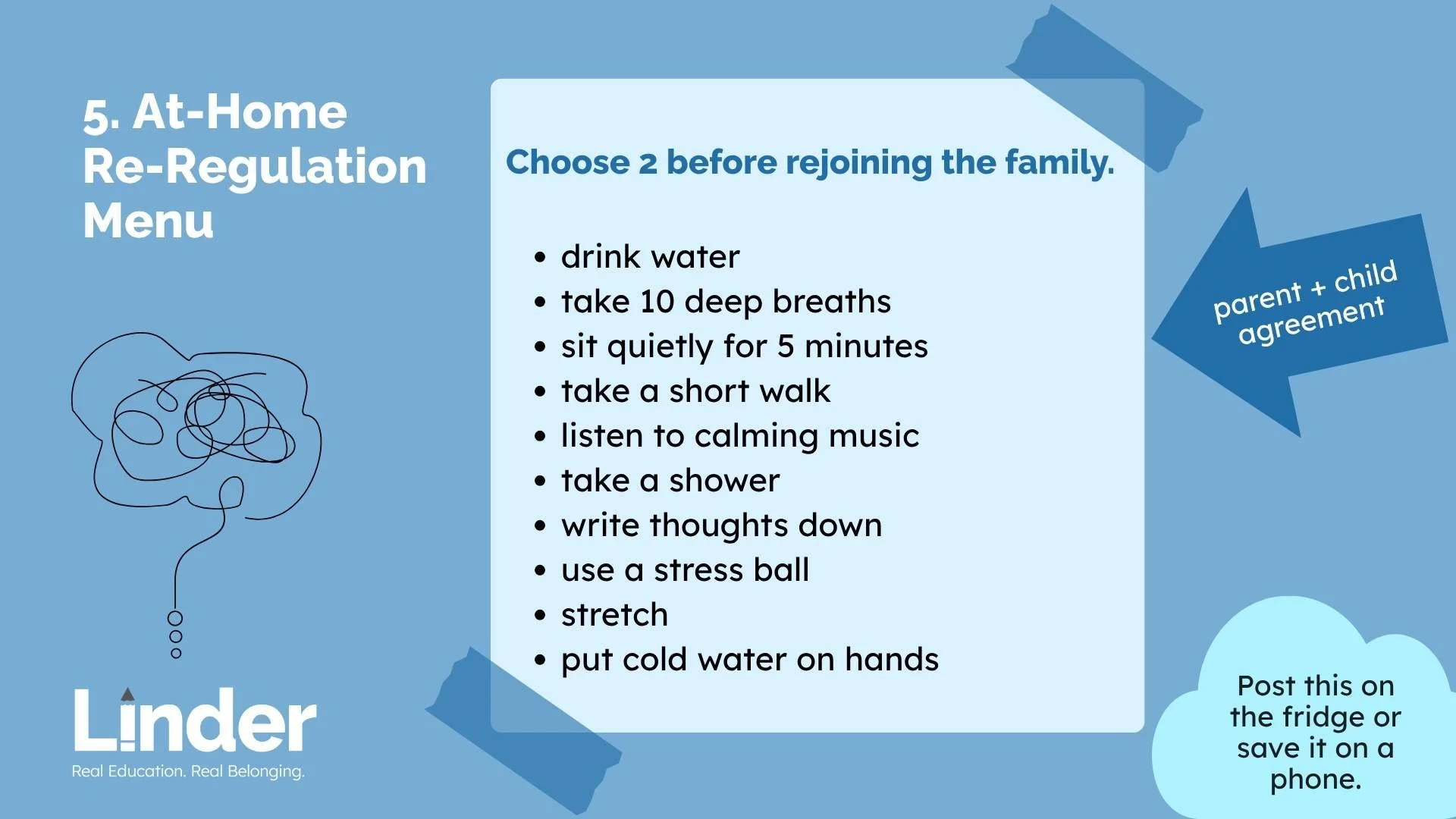
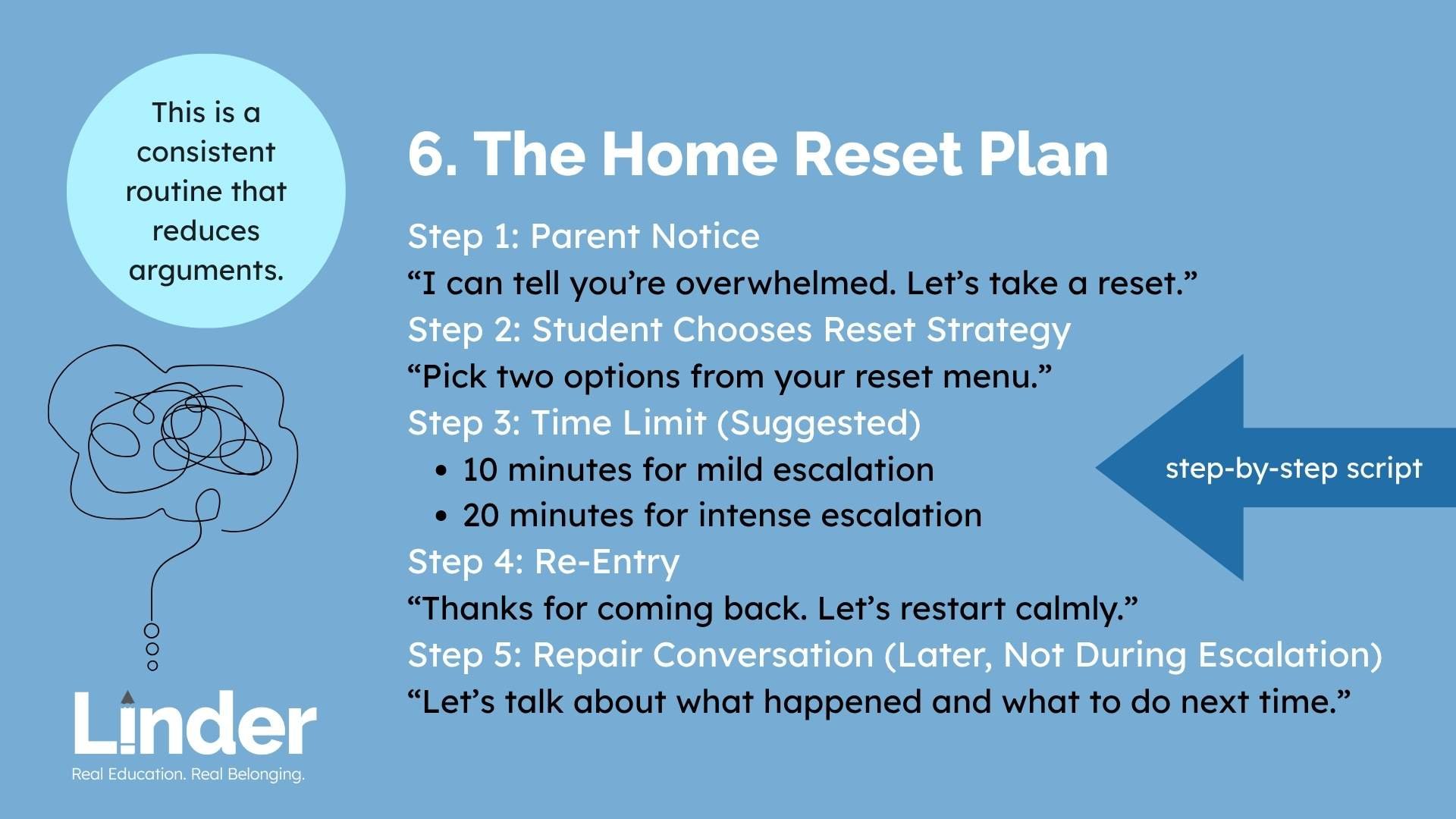
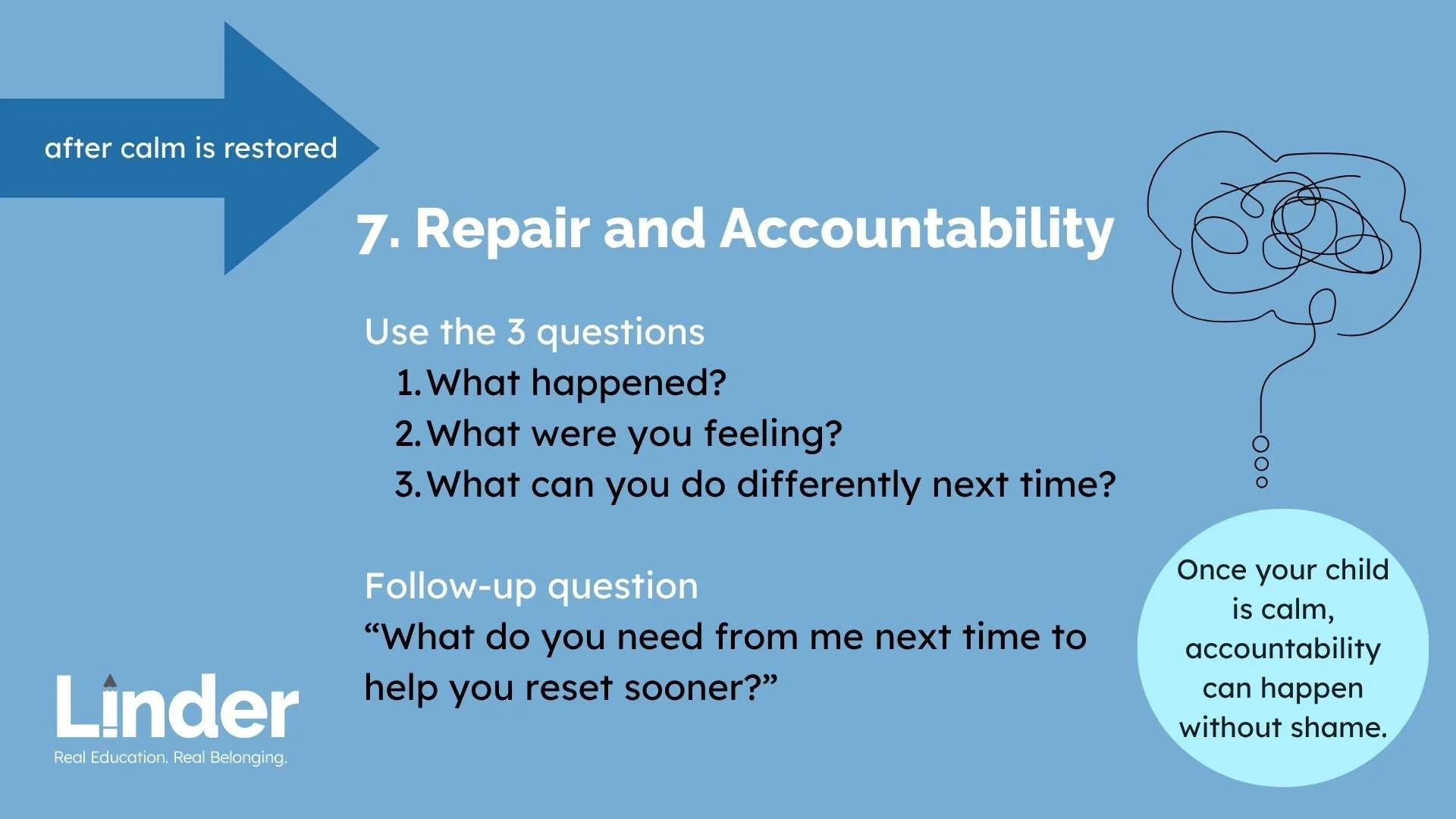
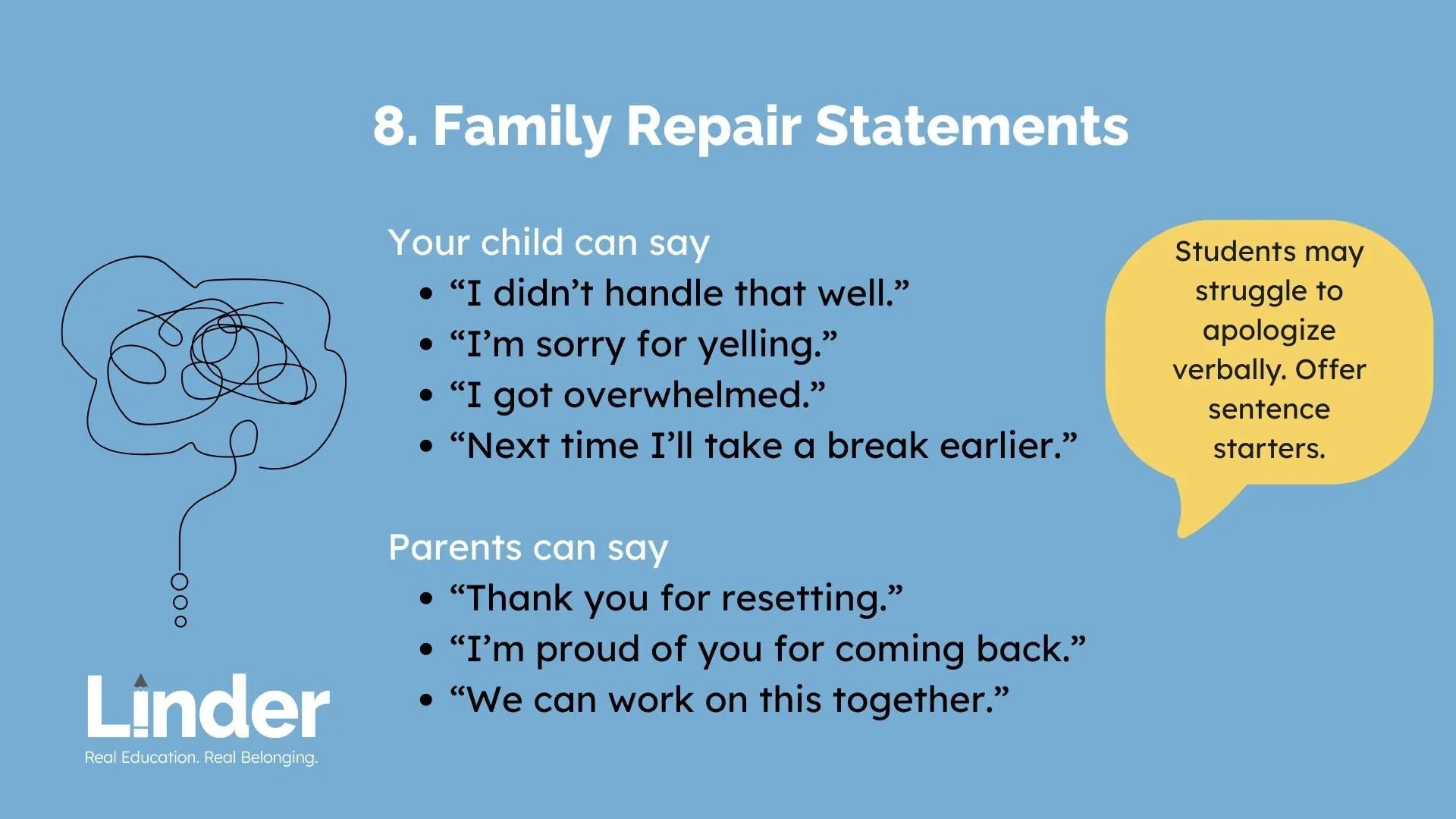
This guide is designed to help families use the same re-regulation strategies we implement at The Linder Academy, so home and school expectations remain consistent.
Goal: Help your child calm their body, reset their brain, and return to expectations with dignity.
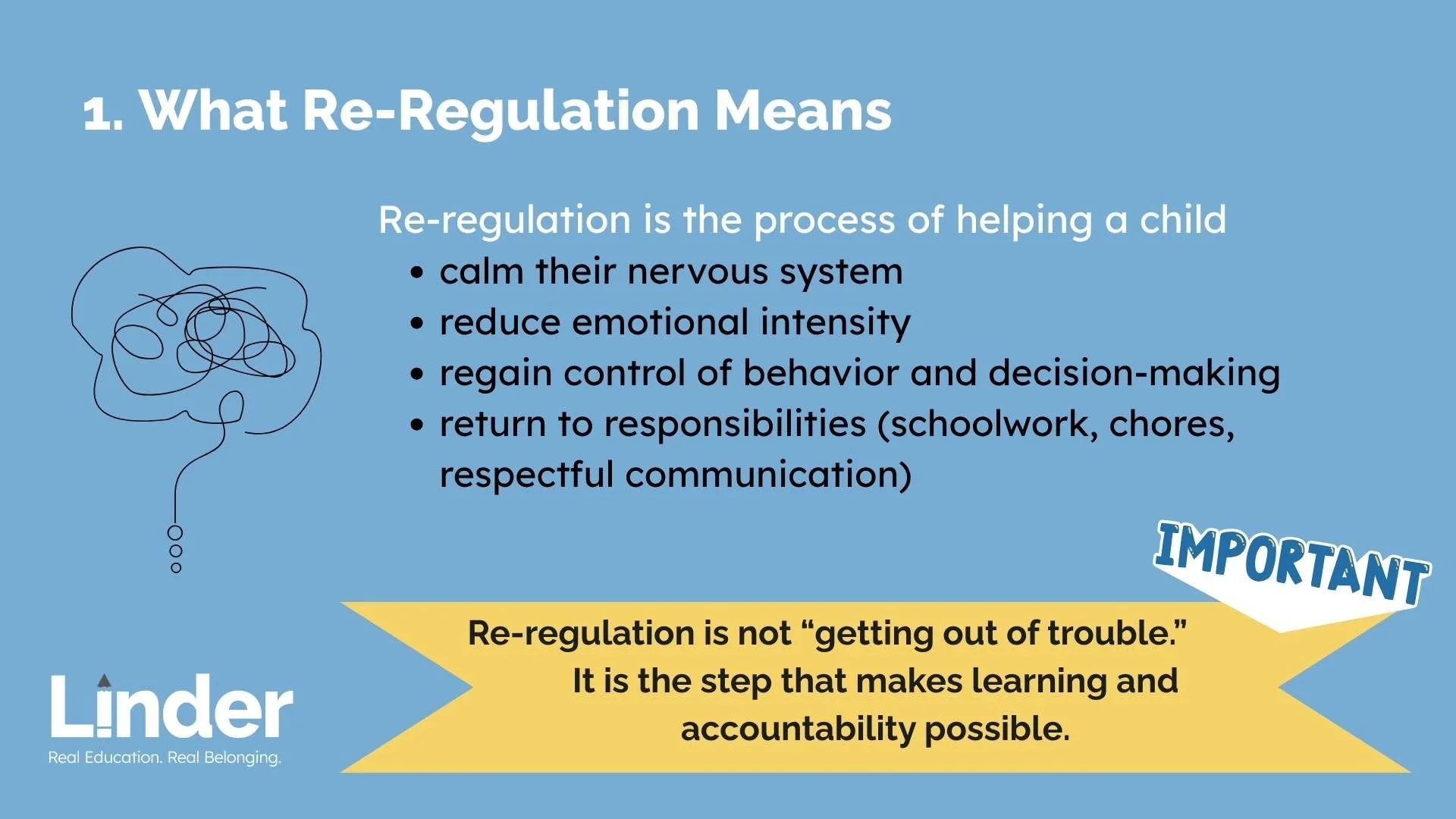
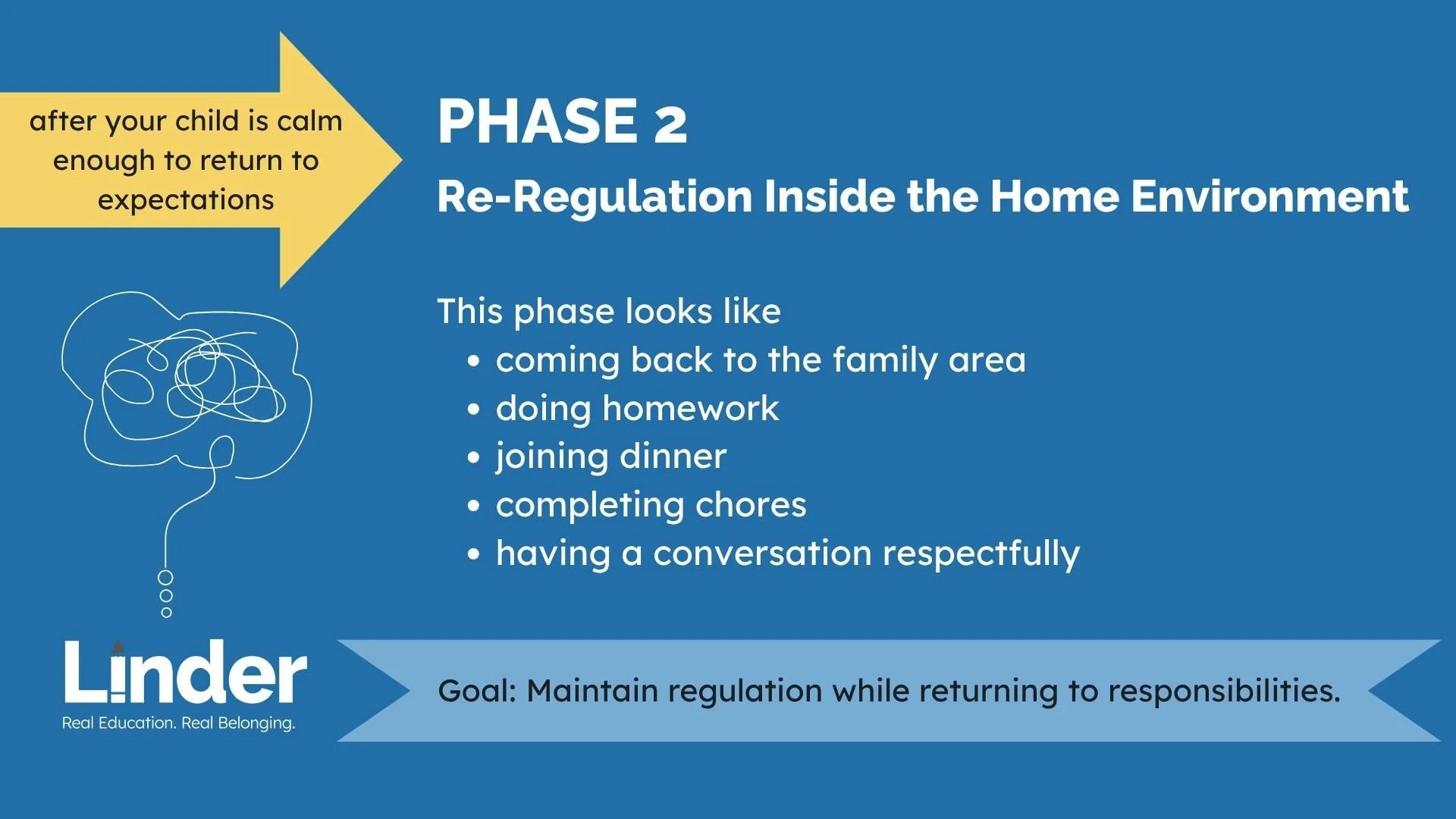
Re-regulation is the process of helping a child
calm their nervous system
reduce emotional intensity
regain control of behavior and decision-making
return to responsibilities (schoolwork, chores, respectful communication)
Re-regulation is not “getting out of trouble.” It is the step that makes learning and accountability possible.
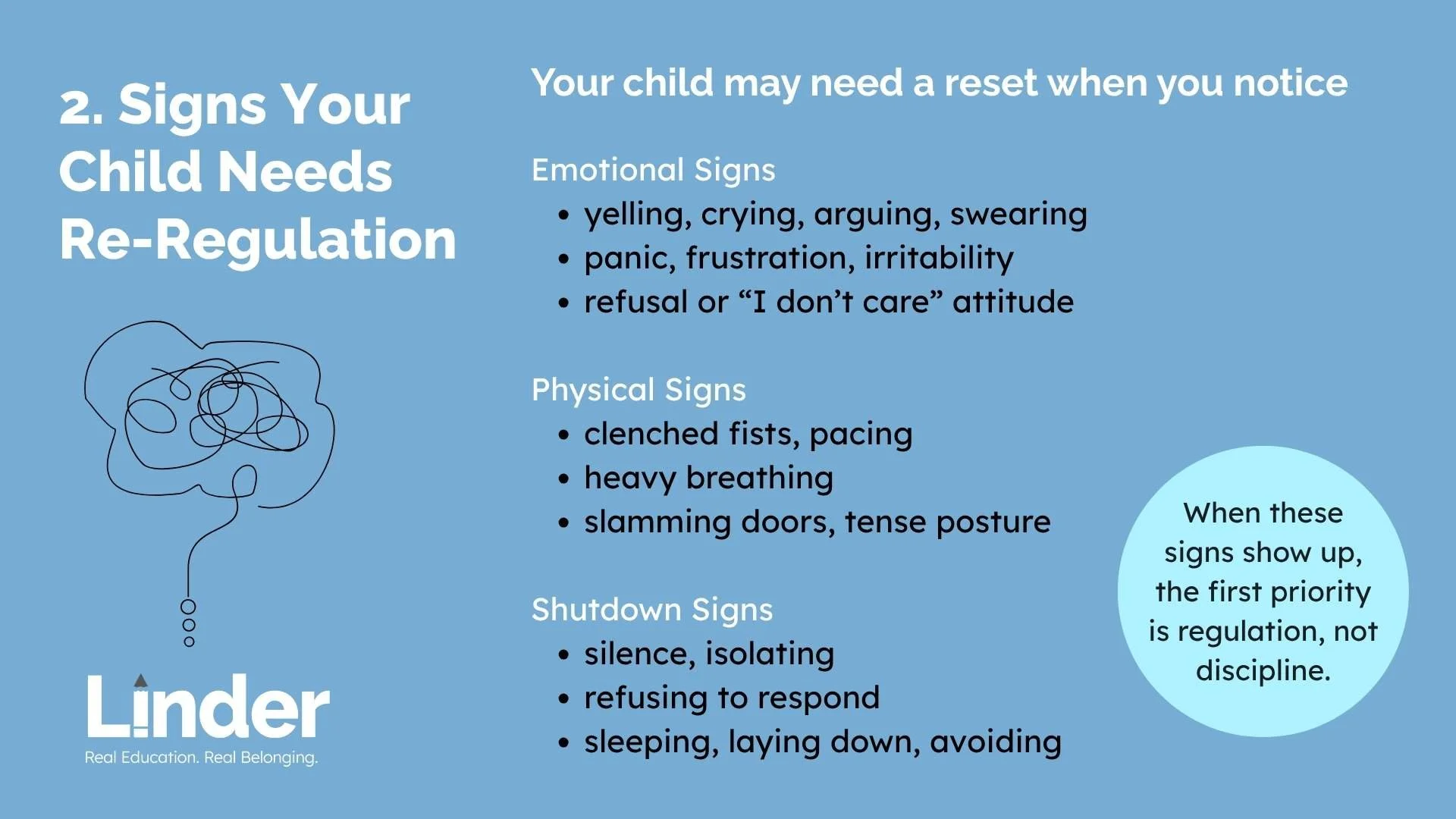
Your child may need a reset when you notice
Emotional Signs
yelling, crying, arguing, swearing
panic, frustration, irritability
refusal or “I don’t care” attitude
Physical Signs
clenched fists, pacing
heavy breathing
slamming doors, tense posture
Shutdown Signs
silence, isolating
refusing to respond
sleeping, laying down, avoiding
At school, students use strategies both inside and outside the classroom.
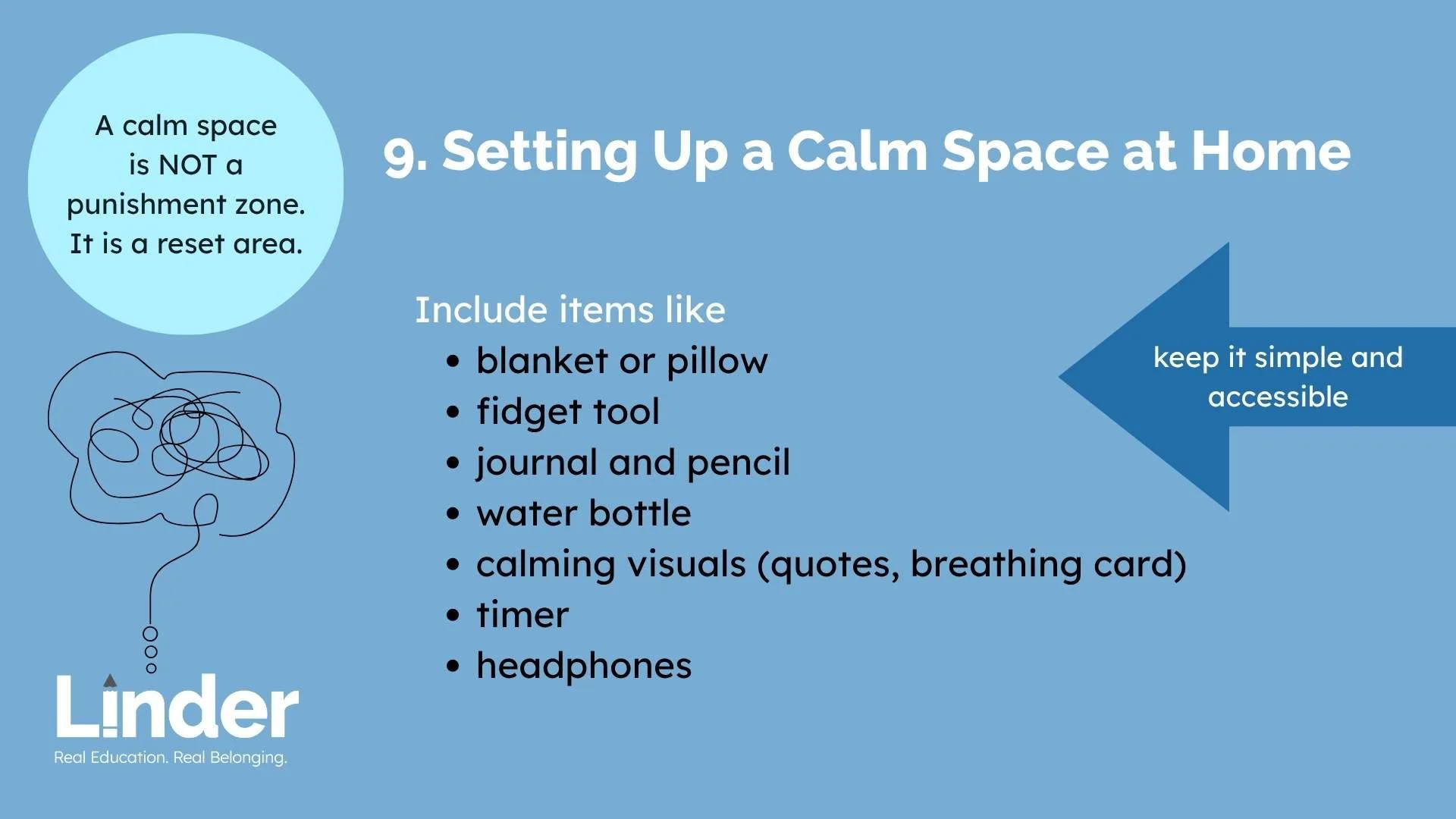
At home, the same structure applies.